Blog / DARCARS Lexus of Greenwich Service

4 Things to Know About Getting a Brake Repair

Brake Repair in Greenwich, CT
Your brakes are a critical component of your car. Even if you know how important they are, though, it can be easy to neglect them as long as they're stopping your vehicle as they should. However, ignoring the signs that your car needs a brake repair could make your car unsafe for both you and other drivers. Here are some things you need to know about repairing your brakes.

Your Dealership Can Help

In the event that you hear a squealing or grinding sound coming from your brakes or your brake pedal feels spongy when you depress it, your car probably needs to have its brakes inspected. Luckily, you can have this done right at your dealership, usually for free. The factory-trained technician will look at your brakes and determine if they need to be fixed or replaced, both of which can be done at the dealership service center.

Types of Brake Repairs

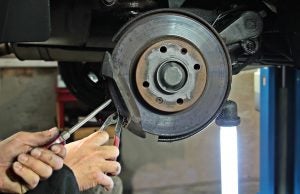
The most common type of repair for your brakes is replacing the brake pads, which wear down every time you slow or stop your car. Your brake pads should be inspected about once every six months to ensure enough surface is left on your pads to stop your vehicle effectively. You may also hear a squealing sound, which is intentionally designed to get your attention when your brake pads have worn to a dangerous level. Warped rotors are another type of repair that is common in any braking system that involves disc brakes. Warping occurs when the rotors are overheated from continued braking or the improper tightening of the wheel. If you have a warped rotor, you may feel a vibration or pulsing sensation when you press on your brake pedal. Sometimes, rotors can be repaired through resurfacing, but they will need to be entirely replaced in many cases.

How to Prevent a Repair

Eventually, your brakes are going to need to be repaired simply because your brake pads wear down when your brakes are in use. This is not something that can be prevented altogether. However, you can delay the need for repair by practicing good driving and braking habits. For instance, try not to "ride" your brakes, which causes extra wear on the pads and creates heat that can warp your rotors. Instead, slow down using moderate pressure and release to cool the brakes between applications. If you're coming down a steep hill, use your downshift powers to slow the vehicle rather than applying the brakes. This allows the engine to take some of the pressure off the brakes to slow down. Additionally, make sure to keep your braking system and wheels clean by applying a wheel cleaner that is safe on your wheels' finish. Clean brakes work more efficiently, which will then keep the temperature as low as possible.

Authentic Parts

When you have to get your brakes repaired, be sure that the mechanic is only using genuine parts designed for your specific car. The best way to ensure this happens is to have your brakes repaired at your designated certified service & parts center. This way, you know that the technician is experienced with making repairs on your car and will only be using authentic parts on your vehicle.   No one wants to have to get their brakes fixed, but it's a necessary part of car ownership, and you want to be sure your vehicle is always safe to drive. Schedule your next brake service & repair with us at DARCARS Lexus of Greenwich. We look forward to serving you at our Lexus Service Center in Greenwich, CT!   Image by Pixabay

Posted in:

Related Posts

Getting an Oil Change in Greenwich, CT

Trusted Lexus Oil Change Service in Greenwich, CT

Have you been keeping up with your Lexus routine oil changes in Greenwich, CT? Why are scheduling oil changes regularly important? Are oil changes a part of your Lexus routine maintenance? Get your oil change questions answered here and schedule your next Lexus oil change appointment at DARCARS Lexus of Greenwich. Lexus Oil Change FAQs Are Oil Changes a Part of Routine Maintenance? Yes! Oil changes are a key service when coming in for your vehicle’s routine maintenance. The service may also involve an oil filter change. In your maintenance schedule, you can find out what other services you should get for your Lexus service. more How Often Should I Get an Oil Change for My Lexus? Depending on the model, mileage you drive, and various other factors, can affect when you need to bring your Lexus in for an oil change. However, it is generally recommended to go for an oil change around 5,000 to 10,000 miles. Depending on whether your car is using conventional or synthetic oil also makes a difference for your oil change interval. You will want to check out your Lexus maintenance schedule, or we can check for you upon your routine maintenance visits. Why is an Oil Change Important for My Car? Going for oil changes at the recommended time is important for your Lexus because when you get an oil change, it removes the debris that may have built up in your vehicle’s engine. With wear and tear over time, old motor oil can become sludgy and may not provide the lubrication your vehicle’s engines parts need to keep moving smoothly. With regular oil changes, it can prevent this wear and tear from happening, as well as stop corrosion and keep the parts in your vehicle’s engine cooler. What Kind of Oil Does My Lexus Need? You can find out what type of oil your Lexus needs by taking a look in your owner’s manual. The certified Lexus service professionals at our Lexus Service Center can also help you decide which oil is right for your Lexus when you bring in your car for a service visit. Schedule a Lexus Oil Change Appointment in CT Today Ready to get your Lexus car or SUV’s oil change booked? Use our user-friendly online service scheduler to get your oil change appointment secured today. Be sure to see if you can save on your Lexus service by exploring what current service coupons are available at our Lexus dealership.

New Car headlights in Greenwich, CT

Need New Headlights in Greenwich, CT? It’s Time To Visit Your Lexus Dealer

When it's dark or hazy, it's especially important to be able to see the road ahead. It's also critical that other drivers and pedestrians can see you. Working headlights are vital in this regard. Headlights can fail for many different reasons, and if they do, it's essential to replace them ASAP. As your Lexus service center in Greenwich, CT, we can replace them for you. These are a few signs that it's time to get new headlights. Frequent Blown Bulbs Headlight bulbs can fail simply due to age. Depending on the type of bulbs you have, they can last from 500 hours to 30,000 hours before replacement. If you find that your bulbs are blowing more frequently, this is a sign that something is likely wrong with the electrical system. Two possible causes are a short in the socket or a problem with your alternator. more A short in the headlight socket can result in power fluctuations in the bulb, and this will cause it to fail faster than it should. A damaged alternator will produce less power for the electrical system than it should. The reduced power means that the available electrical supply has to be shifted between components as needed. A constantly shifting power supply will cause the bulb to blow. Our technicians will trace the source of the problem. Discolored or Damaged Lenses The clean plastic covers that protect your headlights can get damaged. Grit, sand, and other debris can scratch them, and the bright summer sun can also cause them to become discolored. This discoloration isn't aesthetically pleasing, and it can make your headlights look dimmer than they are. The covers can also be cracked by debris thrown up from the surface.   A cracked lens can allow water to seep into the headlight socket. This water will damage the bulb socket and can cause a short in your electrical system. It's also important to be aware that it's a traffic offense to drive with cracked headlights, and you can receive a ticket. Dim or Flickering Lights Just like the bulbs in your home, your headlight bulbs will be dim or flicker before they're about to fail. As we've seen, the lifespan of headlight bulbs is varied. If one of the bulbs blows, we advise replacing both of them at the same time. Bulbs are installed as pairs, and if one fails, the other will, almost certainly, within a couple of days.   Another potential cause of flickering lights is a failing alternator. Your car's computer will allocate just enough power to the headlights to allow them to work. If other accessories are switched off, for example, the radio, the extra power will be allocated to the lights. The flickering is a sign that the power supplied by the alternator is varying due to demands by other systems in your car.   If your headlights are showing signs of wear or need to be replaced, schedule a replacement with our service department at DARCARS Lexus of Greenwich. Does your Lexus need another part replaced? Order any of the genuine parts you need now!

Catalytic converter service in Greenwich, CT

Does Your Lexus Need a New Catalytic Converter?

As the component that converts over 90% of harmful emissions into safer compounds, your catalytic converter is essential to the health of your car and of the planet. But if it isn't functioning at peak capacity, it'll also impact your driving experience. Here are some of the ways you can recognize when it's time to schedule a service at your Lexus dealer for a replacement. Time To Contact Your Lexus Dealer? Converters have an average lifespan of ten years or 100,000 miles, so it's possible that you may never need a replacement. However, it is a wearing part, so scheduling a check every 50,000 miles or so will ensure that it receives monitoring and maintenance to keep it in good condition. more What Could Go Wrong? Known as the "cat", the converter contains tiny pores that are coated in precious metals such as palladium and gold. This honeycomb structure can be damaged by a sharp blow, causing pieces to break off.   Alternatively, if oil, antifreeze, or unburned fuel have infiltrated the exhaust system, then the converter may become clogged. This could be caused by: Bad valve seals Piston ring failure Poor spark plugs Unbalanced fuel-air mixture If your car has suffered any of these problems recently, then the cat could be suffering from the knock-on effects, so it's wise to arrange an inspection. What Are the Warning Signs? You know your Lexus better than anyone, so you'll probably be the first person to notice if the converter isn't working. The following might all signal that the cat is struggling: Rattling Noises If the converter is damaged, pieces of the honeycomb structure can break off and enter the exhaust pipe, causing a rattling noise that's loudest at ignition. Bad Smells When the cat isn't working, hydrogen sulfide will infiltrate the system instead of being catalyzed into odorless compounds. This can cause a sulfuric smell. You might also notice a burning odor or thick black smoke from the exhaust pipe. Soggy Acceleration By restricting the flow of exhaust gases, a malfunctioning cat will have an impact on the power from the engine. If you notice that your car is sluggish when it comes to accelerating or driving at speed, then the converter could be the culprit. It will also burn fuel less efficiently, which in turn will make an impact on costs at the gas pump.   As well as making your driving experience less enjoyable, a malfunctioning cat will cause harmful chemicals to build up in your engine and potentially damage other components of your car, so it really is essential to make sure that it's in good health. If you're in any doubt, contact us at DARCARS Lexus of Greenwich. We will be happy to answer any of your questions and get you in quickly for repairs!